Dreaming of a San Martin property where you can keep horses, grow a little, and enjoy more space? That dream can be a great fit in 95046, but rural property works differently than a typical suburban home search. If you are looking at equestrian or hobby farm properties, you need to look beyond the barn photo and focus on zoning, access, utilities, permits, and long-term usability. Let’s dive in.
Start With County Rules
San Martin is an unincorporated rural community in Santa Clara County, and it is governed through the County’s San Martin Planning Area policies rather than city rules. That matters because land use, setbacks, circulation, and site planning can affect how you use the property today and what you can change later.
In this area, acreage is not just “extra land.” Santa Clara County’s General Plan limits development outside urban service areas to non-urban uses and rural densities, with one primary dwelling allowed per legal lot. If you are buying for horses, gardening, equipment storage, or future improvements, you should treat the land as a regulated rural site from day one.
The County is also reviewing rural zoning updates and equine-keeping rules. That means older listing language may not reflect the current practical use of a parcel. Before you fall in love with a property, confirm its zoning and jurisdiction through the County’s Permit Center and Property Explorer.
Check Zoning Before Anything Else
A beautiful pasture or existing stall setup does not automatically mean every horse-related use is allowed. In Santa Clara County, the rules can differ depending on the zoning district and whether your use is personal or commercial.
County staff’s equine outreach materials summarize current horse-keeping rules this way:
- In A, AR, and RR districts, there is no specified limit for personal horses
- In HS districts, the limit is 3 large animals per acre
- In urban residential districts, the limit is 1 horse per half acre
That is why your first question should not just be, “Can I have horses here?” It should be, “What type of horse use is allowed here?” Personal use, boarding, training, lessons, or events can be treated very differently.
Personal Use vs Commercial Use
If you plan to keep your own horses, your review may be simpler depending on the zoning. If you want to board horses, offer training, or operate any kind of stable business, the rules can change quickly.
According to the County’s current equine guidance, commercial stables require a Use Permit, a minimum lot size of 2.5 acres, and site design that addresses erosion control, manure management, fly control, and water contamination concerns. If your long-term plan includes income-producing equestrian use, verify that early instead of assuming the existing setup is enough.
Focus on Site Layout
For equestrian and hobby farm buyers, layout matters just as much as acreage. A property can look roomy online and still function poorly in real life.
The best setups usually separate the living area from the work areas. You want the house, barn or stable, feed and tack storage, paddocks, manure handling, equipment parking, and vehicle circulation to work together without creating awkward bottlenecks.
Look for Clear Circulation
Think about how you will actually move through the property on a normal day. Can you bring in hay, park a trailer, move equipment, or access paddocks without blocking the driveway or crowding the house?
Santa Clara County notes that driveways should provide at least 10 feet of unobstructed width between buildings and property lines, with at least 8 feet of paved width, and the fire marshal can require more. On a rural parcel, access is not just about convenience. It can affect safety, emergency response, and future permit approval.
Review Accessory Structures Carefully
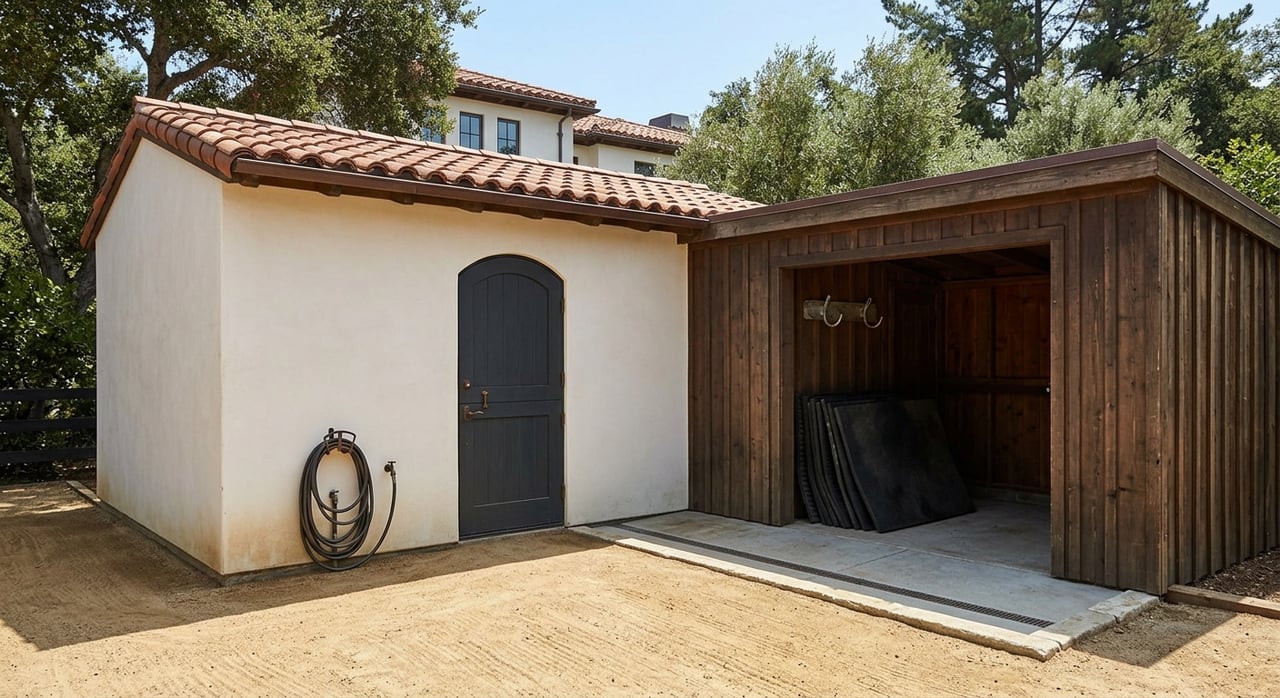
Barns, sheds, detached garages, and water tanks are treated as accessory structures by the County. Those structures are subject to zoning-specific setback and height limits, so their placement matters.
Some buyers assume smaller outbuildings are always simple. In reality, permit exemptions are limited. Certain one-story detached accessory structures up to 120 square feet may not require a building permit, along with some fences under 7 feet and retaining walls under 4 feet, but those structures cannot be used as housing or overnight sleeping.
Watch for Hidden Utility Costs
One of the biggest mistakes buyers make with hobby farms is underestimating site infrastructure. A property may have the charm you want, but wells, wastewater systems, drainage needs, and grading requirements can shape the real cost of ownership.
Santa Clara County’s building checklist can require clearances for onsite wells and onsite wastewater treatment systems, along with water or sewer clearance letters depending on the site. If you plan to build, expand, or improve the property, these details can affect timing and budget.
Drainage and Grading Matter
Rural improvements often trigger more review than buyers expect. The County notes that a drainage permit may be required for more than 2,000 square feet of new impervious area, and a grading permit may be required for more than 150 cubic yards of cut or fill or a 5-foot vertical cut.
That can come into play if you want to add an arena, expand parking, improve driveways, or create new building pads. A parcel that seems flexible at first glance may have a more complicated path once earthwork and drainage are involved.
Ask About Permits and Legal Use
In San Martin, permit history is a major value factor. The most attractive rural properties are often the ones with legal outbuildings, clear records, and fewer surprises.
The County states that a planning land-use application is required for new residences, non-residential uses, additions over 500 square feet, and certain grading projects. In practice, that means you should ask questions about barns, arenas, substantial additions, and any use changes before you assume you can continue or expand them.
Why Permit History Helps Resale
When you buy a rural property, you are also buying its paper trail. If structures were added without proper review, or if uses expanded beyond what the site supports, those issues can affect financing, insurance, future improvements, and resale confidence.
Code enforcement also notes that accessory structures cannot be used as housing or overnight sleeping. The cleaner the permit history, the easier it is to protect value when it is your turn to sell.
Understand Williamson Act Status
If a San Martin property is under a Williamson Act contract, that can affect both land use and resale considerations. Santa Clara County reports that a large share of county land is under Williamson Act contracts, so this is not a niche issue.
For horse property buyers, one key point is that horse boarding, horse training, or occasional horse sales are not themselves considered commercial agricultural use or agricultural commodities on contracted land. At the same time, the County’s Williamson Act guidelines say horse stabling and training facilities, barns, and other farm storage buildings can be compatible uses when commercial agriculture remains the primary use.
This is an important distinction. If a property’s value or appeal depends on a certain equestrian business model, contract status deserves close review during due diligence.
Screen Environmental Constraints Early
San Martin’s rural appeal also comes with site-specific constraints that can shape what you can build and where. These issues are easier to manage when you know about them early.
One example is the County’s San Martin riparian setback rule. It requires a minimum 30-foot setback from the top of stream bank or riparian vegetation for ground-disturbing construction activities. That can affect fence placement, driveways, arenas, and outbuildings near drainage corridors.
Fire Hazard Is a Core Check
Wildfire exposure should also be part of your early screening. Santa Clara County publishes Fire Hazard Severity Zone maps for the Local Responsibility Area, and the County’s building checklist notes that South Santa Clara County Fire District clearance may be required for new structures or additions over 500 square feet.
If you are comparing multiple rural properties, fire access, defensible layout, and future clearance requirements should be part of the conversation. These factors can influence both usability and future project costs.
Think About Daily Function and Future Value
The right San Martin equestrian or hobby farm is not always the one with the most acreage or the prettiest online photos. It is the one that supports your intended use with the fewest legal, physical, and operational obstacles.
As you tour properties, think in practical terms:
- Does the zoning support your intended horse or hobby farm use?
- Are the barn, paddocks, and storage areas laid out efficiently?
- Is driveway access workable for trailers, deliveries, and emergency access?
- Are the outbuildings likely to be legal and properly placed?
- Could wells, wastewater, drainage, or grading become major cost factors?
- Are there riparian setbacks, fire review issues, or other site constraints?
- If the property is under Williamson Act contract, does that affect your plans?
In a market like San Martin, the most valuable rural properties tend to be the ones with clear access, documented improvements, and fewer assumptions built into the sale. That is especially important while County zoning and equine rules continue to evolve.
If you are considering an equestrian or hobby farm in San Martin, having local guidance can save you time and help you ask better questions before you commit. For grounded advice on rural properties in South Santa Clara County, connect with Erica Trinchero.
FAQs
What should you verify before buying a San Martin horse property?
- You should verify the parcel’s County jurisdiction, zoning district, intended horse use, permit history, access, and any site constraints such as drainage, riparian setbacks, wastewater systems, or fire review requirements.
Are personal horses allowed on all San Martin rural properties?
- Not automatically. Horse-keeping rules depend on the zoning district, so you should confirm the parcel’s current zoning and allowed use with Santa Clara County before you rely on marketing remarks.
Can you run a boarding or training business on a San Martin equestrian property?
- You should not assume so. County guidance says commercial stables currently require a Use Permit, a minimum lot size of 2.5 acres, and site design that addresses manure, erosion, fly control, and water contamination issues.
Why does permit history matter on a San Martin hobby farm?
- Permit history matters because legal outbuildings, approved improvements, and clear use records can reduce future issues with upgrades, compliance, and resale.
How can a creek or drainage area affect a San Martin farm property?
- In San Martin, the County’s riparian setback rule requires a minimum 30-foot setback from the top of stream bank or riparian vegetation for ground-disturbing construction, which can limit where you place arenas, fences, driveways, or outbuildings.