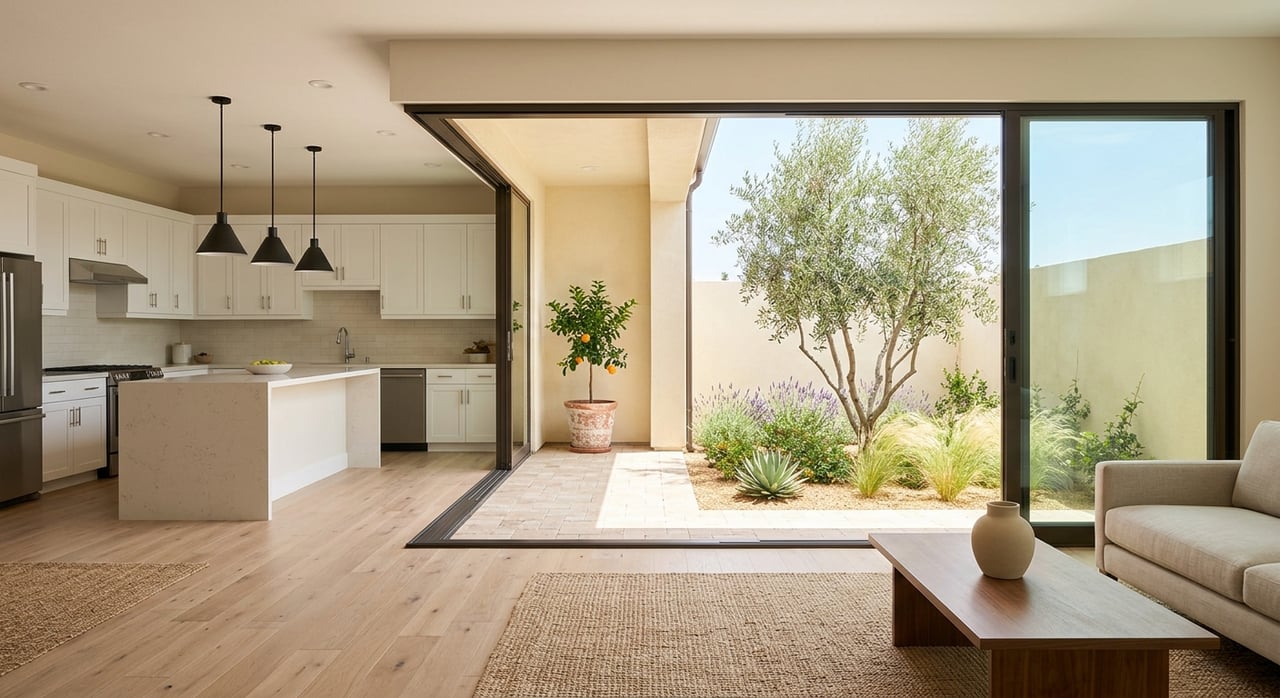
If you want a newer home in Hollister, you are not just choosing a house. You are choosing a lifestyle tradeoff between price, space, amenities, and commute. For many South Bay buyers, that trade can make a lot of sense, especially if you want newer construction that may feel very different from Hollister’s older housing stock. In this guide, you’ll get a clear look at what newer neighborhoods in Hollister actually offer, what to compare before you buy, and how to tell whether the fit is right for you. Let’s dive in.
Why newer Hollister stands out
Hollister is still in an active housing-growth cycle, not a market where all the major development is already finished. The city adopted its current 2023 to 2031 Housing Element on April 20, 2026, and that plan includes a Regional Housing Needs Allocation target of 4,163 units. That matters because it signals continued focus on adding housing in and around existing urban development.
There is also a clear difference between newer homes and much of the existing local inventory. A 2024 housing-element draft shows that most of Hollister’s housing was built before 1990. If you have been touring older homes and then step into a newer subdivision, the contrast in layout, finishes, and overall feel can be noticeable.
For many buyers, value is what puts Hollister on the shortlist. Census QuickFacts reports a median owner-occupied home value of $717,500 in Hollister, compared with $1,027,400 in Gilroy and $1,210,200 in Morgan Hill. In simple terms, you may be able to stretch your budget further here, though that often comes with a somewhat longer drive.
What newer homes look like
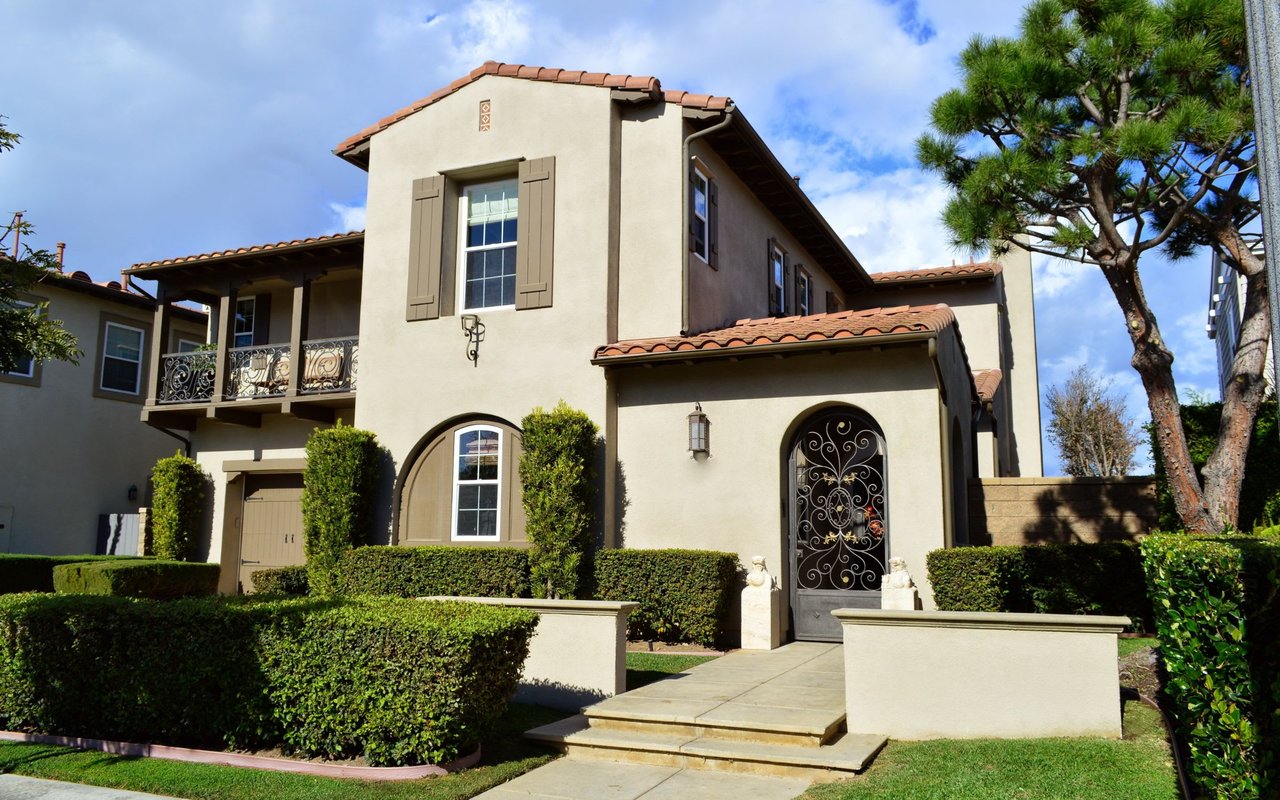
One of the biggest misconceptions about newer Hollister neighborhoods is that they are all the same. They are not. The city’s current major-development list shows a mix of detached homes, duet-style homes, townhomes, condos, attached accessory dwelling units, and mixed-use residential projects.
That variety gives you more than one path into newer construction. If you want a traditional detached home, there are communities built around that format. If you want lower-maintenance living or a smaller footprint, attached options and infill-style projects may also be part of your search.
Detached and duet-style options
Willow Landing is one example of the range you will see in newer Hollister housing. The city lists it as 116 single-family detached homes plus 28 duets. Builder information describes homes with 3 to 4 bedrooms, about 1,684 to 2,494 square feet, one- and two-story layouts, and pricing from the high $600s.
Aspen Park is another detached-home community on the city’s major-development list, with 100 detached homes planned. Everglen also expands the detached-home category, with 82 detached homes plus 16 attached ADUs. According to builder information, Everglen includes floor plans from about 1,434 to 2,862 square feet, with one- and two-story options and pricing from the low $700,000s.
These communities can appeal if you want the benefits many buyers associate with newer construction, such as more current floor plans, a fresh-home feel, and less immediate maintenance compared with some older resale properties. Still, the exact layout, lot size, features, and monthly costs can vary widely from one neighborhood to another.
Townhomes, condos, and infill choices
If your budget, lifestyle, or maintenance preferences point you away from a larger detached home, Hollister’s newer inventory also includes attached products. The city lists South Street Townhomes as a 14-townhome project and Bebek, also called 4th & Westside, as 84 condos. San Juan Crossings is listed as 132 mixed-use residential units.
This matters because a newer home in Hollister does not always mean a suburban tract house. Depending on what becomes available, you may find opportunities that offer a smaller footprint, a different price point, or a more streamlined ownership experience. For some buyers, that can be the right entry into the market without taking on the size or maintenance needs of a larger property.
Notable newer communities
Some Hollister neighborhoods come up again and again because they highlight the range of choices in the market. When you compare them side by side, it becomes easier to define what matters most to you.
Willow Landing
Willow Landing stands out as a current all-ages option with both detached and partial duet homes. Builder information points to 3 to 4 bedrooms, one- and two-story plans, and sizes from about 1,684 to 2,494 square feet. The community also highlights a future park, access to shopping and dining, and a setting shaped by scenic landscapes.
If you want a newer neighborhood feel with multiple home formats, Willow Landing may be worth a close look. It gives you a sense of how newer Hollister can blend suburban-style living with a range of floor plan sizes.
Everglen
Everglen offers another strong newer-construction option. Builder details note floor plans that range from about 1,434 to 2,862 square feet, with homes reaching up to five bedrooms and 3.5 baths. The community also emphasizes access to Highway 25 and US-101.
For buyers balancing household space needs with a commute toward Silicon Valley, this type of community often gets attention quickly. The home size range is broad enough that both first move-up buyers and buyers seeking more room may find relevant options.
Santana Ranch
Santana Ranch remains one of the best-known newer-master-planned references in Hollister. Builder materials describe views, walking trails, parks, and a new K-8 school, along with sub-neighborhoods offering open floor plans, 3 to 4 bedrooms, and homes from about 1,675 to 3,075 square feet.
Santana Ranch is also useful for a different reason. Some releases have advertised no HOA fees, which can affect your monthly carrying costs in a meaningful way. That does not mean you should assume there are no rules or restrictions, but it does make this community important when comparing total ownership costs.
Twin Oaks and Trilogy San Juan Oaks
If you are specifically searching for 55+ living, Hollister has two standout options. Twin Oaks is described in its official brochure as a gated enclave of 168 single-story homes, with floor plans from 1,579 to 2,011 square feet. Amenities include the Cannery Club, a resort-style pool, bocce and pickleball courts, a fitness facility with yoga studio, dining space, and a pet spa.
Trilogy San Juan Oaks is another major 55+ community in the market. Builder information describes a master-planned golf setting with single-story homes from about 1,507 to 2,906 square feet, 2 to 4 bedrooms, and pricing starting around $702,499. Planned amenities include the Oak House Wellness + Social Club, along with golf, restaurants, open space, and trails.
Compare monthly costs carefully
When you buy into a newer neighborhood, the purchase price is only one part of the decision. Monthly ownership costs can differ a lot from one community to another, especially if shared amenities, gates, common areas, or private roads are involved.
In California, homeowners associations are real governing bodies that make and enforce rules, usually through a homeowner-elected board. The California Attorney General explains that CC&Rs define the rights, responsibilities, and restrictions that bind owners. The California Department of Real Estate also notes that HOA assessments can materially affect affordability and even loan qualification.
What to review before you commit
Before you move forward on any newer Hollister property, make sure you review:
- Current CC&Rs
- Bylaws and community rules
- Monthly dues
- Any special assessments
- Reserve funding
- Maintenance responsibilities
- Architectural restrictions
- Property use restrictions
This is especially important because the DRE notes that CC&Rs can exist even when there is no HOA. In other words, a property advertised with no HOA fees does not automatically mean no restrictions. In communities like Santana Ranch, that distinction can matter quite a bit.
Commute is part of the equation
For many buyers coming from or comparing against South Santa Clara County, Hollister’s appeal is closely tied to value. You may gain newer construction, more square footage, or more amenities for the money. In return, you need to be honest with yourself about daily travel.
Census QuickFacts reports Hollister’s mean travel time to work at 36.6 minutes, compared with 33.3 minutes in Gilroy and 33.5 minutes in Morgan Hill. That does not sound dramatic on paper, but your real-world drive can feel very different depending on your work location, hours, and tolerance for car time.
San Benito County Express also adds another layer to the conversation. It provides fixed-route local service, dial-a-ride, and intercounty service to Gilroy’s Caltrain and Greyhound stations, with connections to the Santa Clara VTA bus system. That may help some buyers think more creatively about transportation, though many households will still function primarily by car.
Who newer Hollister fits best
Newer neighborhoods in Hollister tend to make the most sense if you want a brand-new or near-new home and are comfortable trading some commute convenience for price, space, or amenities. If your priority is a larger detached home, a fresh floor plan, or an age-qualified community with strong amenities, Hollister can offer options that are harder to match closer to the South Bay core.
These communities can also work well if you are comparing total lifestyle value rather than just distance on a map. A lower purchase price than Gilroy or Morgan Hill, combined with more house or more neighborhood features, may be worth the trade for you.
On the other hand, if you need a short daily drive to central San Jose or strongly prefer a more walkable, transit-rich setting, you should treat the commute test as a deal-breaker issue. It is better to be clear about that upfront than to fall in love with a floor plan that does not fit your day-to-day life.
How to shop smarter
When you tour newer communities in Hollister, try to compare them through a practical lens instead of focusing on model-home finishes alone. The right match usually comes down to how the home, neighborhood structure, and monthly costs fit your real routine.
A smart comparison checklist includes:
- Home size and bedroom count
- One-story versus two-story layout
- Detached, duet, townhome, condo, or mixed-use format
- HOA dues and what they cover
- CC&Rs and use restrictions
- Access to Highway 25 and US-101
- Commute time during your likely travel hours
- Nearby daily conveniences and community features
If you are relocating from Gilroy, Morgan Hill, or another nearby market, it also helps to compare what the same budget buys in each area. That is often where Hollister’s newer neighborhoods become most compelling.
If you want help sorting through Hollister’s newer communities, comparing ownership costs, or identifying the best-fit option for your budget and commute, connect with Erica Trinchero. Her local market perspective and consultative approach can help you buy with more clarity and confidence.
FAQs
What kinds of newer homes are available in Hollister?
- Hollister’s newer housing includes single-family detached homes, duets, townhomes, condos, attached ADUs, mixed-use residential units, and 55+ communities.
Are newer Hollister neighborhoods always part of an HOA?
- No. Some newer properties may have HOA dues, while others may not, but CC&Rs and other restrictions can still apply even when there is no HOA fee.
How do newer Hollister home prices compare with Gilroy and Morgan Hill?
- Census QuickFacts reports Hollister’s median owner-occupied home value at $717,500, compared with $1,027,400 in Gilroy and $1,210,200 in Morgan Hill.
Are there 55+ communities in newer Hollister developments?
- Yes. Twin Oaks and Trilogy San Juan Oaks are two major 55+ options, both centered on single-story homes and amenity-driven living.
What should buyers review before buying in a newer Hollister community?
- You should review the disclosure packet carefully, including CC&Rs, bylaws, rules, dues, special assessments, reserve funding, maintenance responsibilities, and any architectural or use restrictions.
Is Hollister a good fit for South Bay commuters?
- It can be, especially if you are willing to trade a somewhat longer commute for newer construction, more space, or community amenities. Your likely drive route and schedule should be tested before you commit.